What Do Jerry Maguire and ITIL Have in Common?
Michelle Alex, ITIL Master at PassionIT Group, uses Jerry Maguire to explain ITIL's core principle of value co-creation and why 'Help me, help you' is the most powerful line in IT service management.

Michelle Alex
Contributor

Key Takeaways
- Both Jerry Maguire and ITIL are fundamentally about shifting from transactional, disconnected processes to high-quality, mutually beneficial partnerships.
- Value is co-created, not simply delivered. Neither the service provider nor the service consumer can produce value alone.
- Trust and authentic two-way relationships are not soft skills — they are core ITIL service management requirements.
- The ITIL guiding principle Focus on Value means fewer, deeper engagements yield better outcomes than high-volume, automated responses.
- Experience is strategic — it is not a cosmetic layer added after delivery. It shapes how value is created, received, and sustained.
- AI and automation must be applied responsibly, transparently, and in ways that strengthen the human experience rather than erode it.
Jerry Maguire did not fail because he lacked skill. He failed when he stopped treating clients as partners and started treating them as transactions. That is exactly what happens in IT service management when we confuse closing tickets with delivering value. The moment you start co-creating with your customer instead of delivering at them, everything changes.
Michelle Alex — ITIL Master | PassionIT Group
The Unexpected Connection Between a Sports Movie and IT Service Management
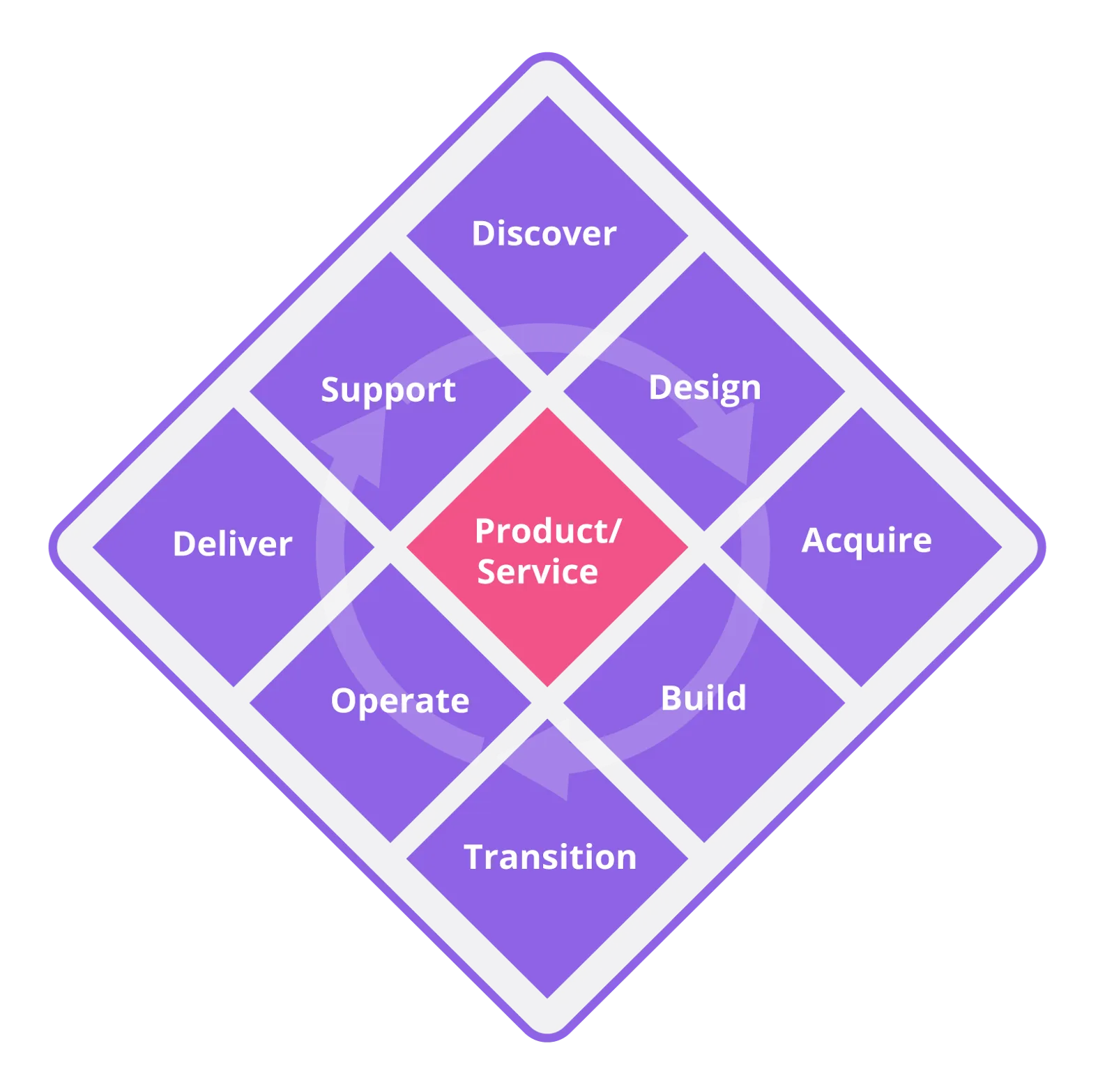
Both Jerry Maguire and ITIL are fundamentally about the same thing: shifting from transactional, disconnected processes to high-quality, deep, mutually beneficial partnerships. In both worlds, the goal is to provide exceptional, personalized value rather than just processing tickets or clients at scale.
ITIL & Digital Product and Service Management
ITIL integrates digital products and service management into an expanded lifecycle model that focuses on value co-creation, human-centered customer experiences, and AI governance. It aligns with modern Agile, DevOps, and AI-enabled frameworks, recognizing that successful service management is as much about relationships as it is about processes.
Source: ITIL & DPSM Framework
Value Co-Creation Through Collaborative Partnerships
Jerry Maguire pleads with his one last client, Rod Tidwell, to collaborate. This is the ultimate analogy for ITIL Service Management, specifically, that value is always co-created through a collaborative partnership.

🎬 In the Film | 🔷 In ITIL |
|---|---|
Jerry (the service provider) cannot deliver a better contract without Rod's (the customer's) cooperation, trust, and openness. His skill alone means nothing without Rod's willingness to engage. | This mirrors the shift from simply "delivering an IT service" to actively co-creating value with the business. The service provider brings technical capability. The service consumer must bring clear requirements, accurate data, and operational cooperation. |
Value Cannot Exist Without Active Collaboration
Jerry is a highly skilled sports agent. But he cannot magically make Rod rich if Rod refuses to listen, does not cooperate, and alienates potential sponsors. The talent is there. The framework is there. But without the consumer’s active participation, value simply cannot be created.
In ITIL, the same principle applies. The Service Provider brings technical capability, but the Service Consumer must provide clear requirements, accurate data, and operational cooperation. Remove either side of that equation and the value equation collapses.
What Active Collaboration Looks Like in IT Service Management
- Service consumers provide clear, honest requirements — not just ticket descriptions, but business context and outcome expectations.
- Service providers communicate proactively, not just when something breaks.
- Both parties define what “success” looks like before delivery begins, not after it ends.
- Feedback loops are built into the relationship — improvement is ongoing and shared.
- Risk is acknowledged and shouldered together, not assigned to one side.
Authentic, Two-Way Partnerships and Service Relationships
In the film’s pivotal scene, Jerry drops the polished corporate agent persona entirely. He appeals to Rod on a human level. He is honest about what he needs. He asks Rod to be honest in return. Both put their cards on the table. Both are willing to shoulder risk. The result is unbreakable trust, and a championship contract.
ITIL makes the same argument with different language. Understanding the customer’s emotional drivers, business pressures, and organizational culture is not optional soft-skills work. It is a requirement for successfully designing and transitioning new services. Technical capability means nothing without trust.
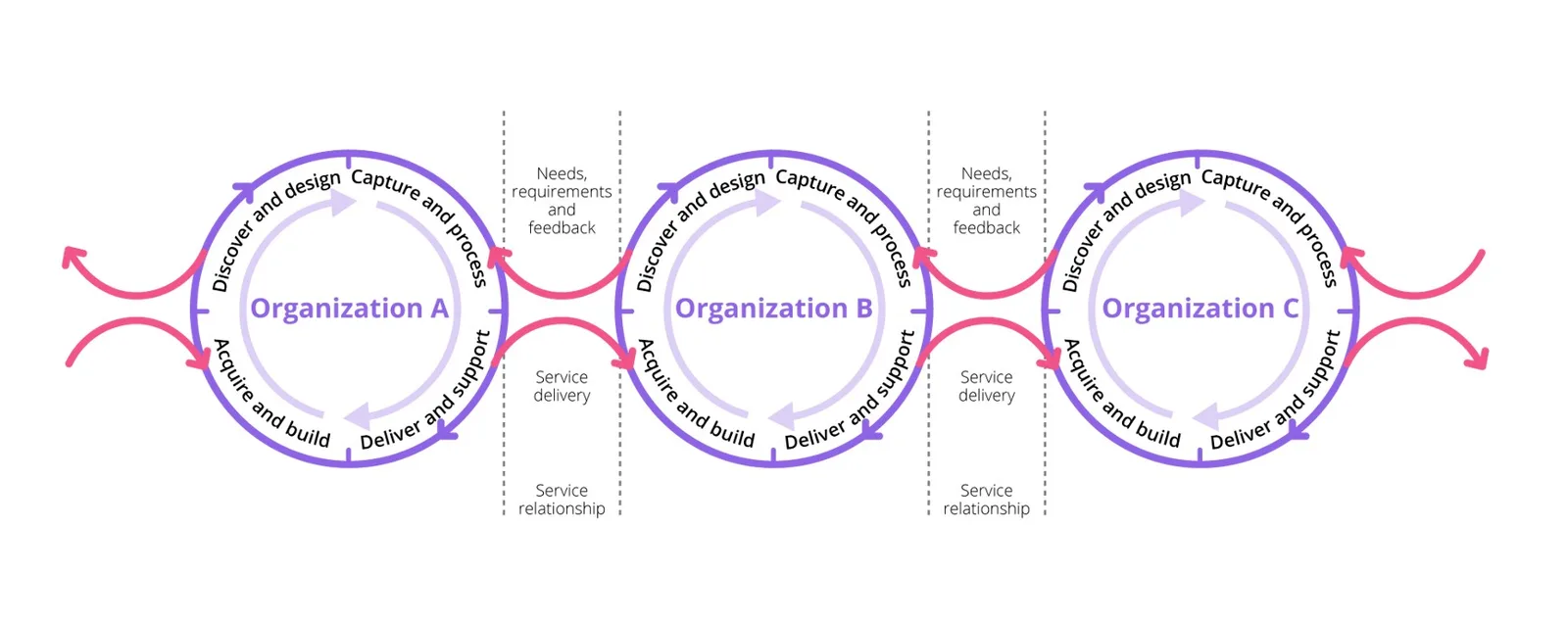
The best service relationships are not built on SLAs alone. They are built on the same things every great relationship is built on: honesty, shared risk, and the willingness to say what you actually need. ITIL gives us the structure. Trust makes it work.
Michelle Alex
Focus on Value: An ITIL Guiding Principle
ITIL Guiding Principle: Focus on Value
Everything the organization does should link directly or indirectly to value for stakeholders. The Service Provider must understand the customer’s perspective and facilitate the co-creation of positive outcomes while managing detailed costs and risks.
Source: ITIL® Guiding Principles
Fewer Clients, More Attention
Jerry has a sudden epiphany: he cannot provide stellar service if his attention is spread too thin. He writes a mission statement — fewer clients, more personal attention, more meaningful results. ITIL promotes the same principle: value over volume. Building strong, focused relationships with service consumers yields better outcomes than simply processing automated, standard responses at scale.
Show Me the Money — Demonstrate Tangible Value

Rod Tidwell’s famous demand is not just about money. It is a client asking for clear value, security, and visible results. He wants proof. He wants to see that the relationship is producing something real. Every service consumer, in every organization, is asking the same question of their IT function: where is the value I was promised?

ITIL’s Focus on Value principle is the answer. It ensures that every activity, every process, and every decision is mapped back to an outcome the customer can actually see and feel.
Why Experience Matters in Modern IT Service Management
In modern digital environments, technology is judged not only by what it does, but by how it feels to the people who use it. Organizations must move beyond simply delivering tangible products and instead focus on value, service, and experience. ITIL reinforces this shift by elevating experience and service into dedicated advanced modules, recognizing that successful service management depends on both outcomes and perception.
Why Experience Is a Strategic Capability, Not a Cosmetic Layer
- Experience drives value. Users evaluate services by ease of use, transparency, response time, communication quality, and perceived empathy, not just technical performance.
- Trust strengthens co-creation. Value is shaped through perception, engagement, and the confidence consumers have in both the service and the provider.
- Adoption depends on the human experience. A well-designed service experience directly influences adoption, loyalty, and measurable business outcomes.
- Design choices have relational impact. Service design decisions affect both functional results and the quality of the relationship between provider and consumer.
- Automation must remain responsible. AI and automation should be applied transparently, ethically, and in ways that strengthen, not weaken, the user experience.
- Experience is strategic. It is not added after delivery; it shapes how value is created, received, and sustained from the very beginning.
The Bottom Line: Help Me, Help You
Jerry Maguire did not become a great sports agent the day he passed his licensing exam. He became one when he understood that his success and his client’s success were inseparable, and that building the kind of trust that makes co-creation possible is not a soft skill. It is the skill.
ITIL makes the same argument for IT service management. The organizations that get the most from their IT investment are not the ones with the most sophisticated tools or the tightest SLAs. They are the ones that treat the service relationship as a genuine partnership, where both sides show up, both sides are honest, and both sides share in what gets built.
Key Principles to Carry Forward
- Value is co-created, not simply delivered. Effective service management requires active collaboration, trust, and shared accountability between provider and consumer.
- Relationships matter as much as results. Technical capability alone is not enough, strong outcomes require empathy, transparency, and a genuine understanding of the customer’s goals.
- Focus on value means focusing on what matters most, meaningful outcomes over volume, automation, or disconnected transactional processes.
- Experience shapes adoption and loyalty. Services succeed when they are easy to use, responsive, trustworthy, and aligned with how people actually experience value.
- AI and automation must support human-centered service, strengthening relationships through clarity and responsiveness, not eroding them through impersonal efficiency.

ITIL® Service (Version 5)
Master the end-to-end service lifecycle in the digital, AI-enabled era with the ITIL Service (Version 5) certification.
- Live, Instructor-led Virtual Class
- Official Exam Voucher Included
- Take2 Re-Sit Option Included
- Office Hours Support
- Digital Course Materials
- Certificate of Completion
FAQs
Frequently Asked Questions
What is value co-creation in ITIL?
What is the ITIL guiding principle Focus on Value?
What is the difference between ITIL 4 and ITIL 5?
Why does experience matter in IT service management?
How should AI and automation be applied in ITIL service management?
What does Jerry Maguire have to do with ITIL?
The Writer
About the Author
Michelle Alex
Contributor
Michelle Alex is an ITIL 5 Master and instructor at PassionIT Group, specializing in value co-creation, human-centered service design, and the practical application of ITIL frameworks in modern digital environments. Her approach to ITIL education is grounded in the belief that the most powerful service management concepts are not found in process diagrams — they are found in the human dynamics of trust, collaboration, and shared accountability. Michelle teaches both the ITIL Service and ITIL Experience courses, bringing real-world depth and relatable clarity to every session.
ITIL® Foundation (Version 5)
Get 40% OFF ITIL® Foundation (Version 5). Master AI-driven ITSM through an accredited, two-day instructor-led course. Attend live online from anywhere or join us in person at our training office.
Keep Reading
Related Articles
What Do Jerry Maguire and ITIL Have in Common?
Michelle Alex, ITIL Master at PassionIT Group, uses Jerry Maguire to explain ITIL's core principle of value co-creation and why 'Help me, help you' is the most powerful line in IT service management.

How to Use Your ITIL Foundation Knowledge in a Job Interview
10 real interview questions with conversational answers you can make your own, and actually say across the table with confidence.

From Failure to ITIL Certification: An ITIL Journey Told Through Classic Literature
After failing ITIL CDS, MSF, and Experience exams multiple times, Gab Cahiwat discovered a better study strategy. Learn how reading ITIL like a story helped her pass ITIL certification.
Ready to Advance Your Career?
Join thousands of professionals who have transformed their careers with our expert-led training programs. Get started today and unlock your potential.